Feel isn't feedback
"That felt good" doesn't tell you you're opening the face or swinging early. Numbers do.
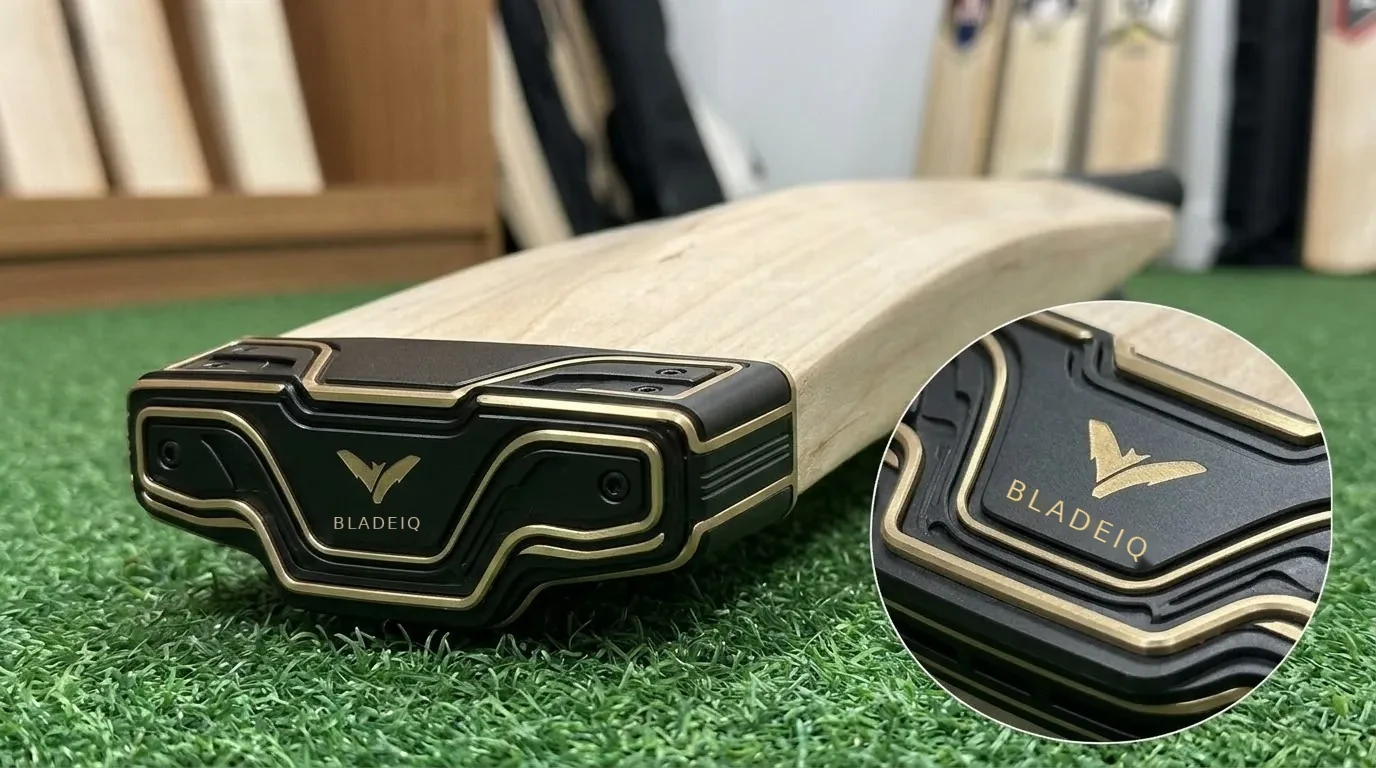
A small sensor we've designed to clip onto the top of your bat handle. After every shot in the nets it's meant to estimate your bat speed, timing, backlift, swing path and face angle, and which part of the bat the ball hit.
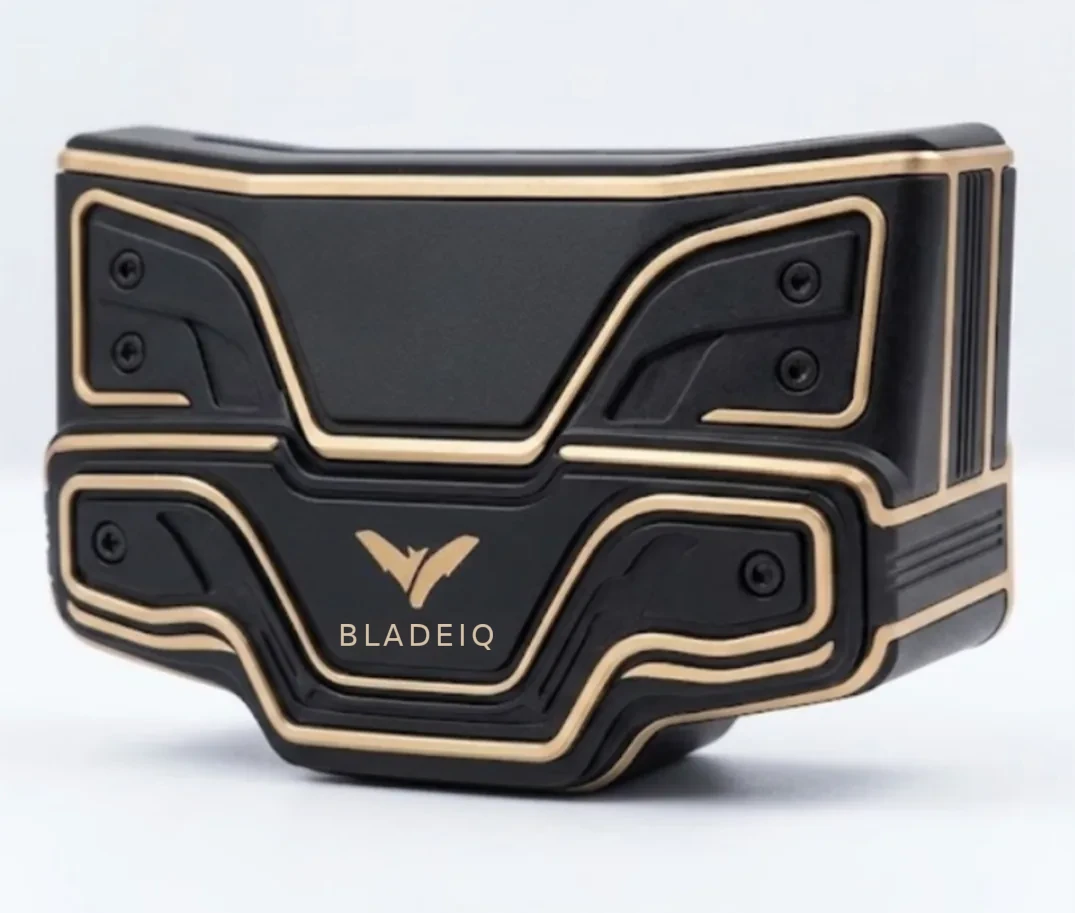
Most batters practise for hours in the nets with nobody watching. BladeIQ turns every ball into feedback you can act on.
"That felt good" doesn't tell you you're opening the face or swinging early. Numbers do.
One coach, twelve batters and three nets. BladeIQ would record every shot and save it for later.
Track your middled-shot rate and timing session by session, so you know the practice is working.
A bat rings like a bell when the ball hits it, and it rings differently depending on where it was hit. BladeIQ is designed to feel that ringing through the handle and work out the spot. We've tested the idea in computer simulations only, not on a real bat yet.
What BladeIQ is designed to estimate. The sensor measures only rotation, acceleration and vibration directly; every number below is worked out from those readings. Before we publish any accuracy, each one needs calibrating and checking against reference measurements on different bats.
How fast the middle of the bat is moving at contact, and the top speed in your swing.
Was the bat at full speed when the ball arrived, or already slowing? "Timed it", "bit early" or "early".
How high the bat goes, and where it comes from: straight, from the slips or from gully.
Is the bat coming straight down the line, or across it? Measured in degrees at contact.
Is the face square, open or closed when you hit the ball? The key to keeping drives on the ground.
Toe, middle or splice; inside edge, centre or outside edge. With a heat map of every hit in the session.
Leave, defence, drive, cut or pull, worked out from the shape of your swing.
Simple tips tied to your numbers, like "you hit the toe 35% of the time: get closer to the pitch of the ball".
We'd rather tell you the zone a ball hit reliably than pretend to measure it to the millimetre.
Shots correctly called as middled or off the middle, after calibration
Checked against high-speed video of the bat
Straight or across the line, at the moment of contact
Your numbers appear before the next ball is bowled
Prototype targets. BladeIQ is in development. These are the accuracy targets for the first nets trials, not final test results.
BladeIQ is designed to sit on top of the handle, well away from the ball, so it never touches the willow. Inside, it's designed to take the shock of every hit. These are design goals until we've tested a prototype.
Your BladeIQ numbers would appear on the slow-motion video clip of each shot.
Adding the speed of the ball you faced would let timing mean timing against the ball, not just the bat.
Line and length of every ball, for insights like "you play across the line to full balls on middle stump". All of these are planned.
Target specifications for the prototype. Subject to change as we finish development.
| Sensors | |
|---|---|
| Motion | 6-axis motion sensor: gyro up to 4000 °/s, accelerometer up to 320 g for impacts |
| Swing sampling | About 1,000 readings a second through the swing |
| Impact sampling | 6,400 readings a second for the 64 ms after contact |
| What it reports | |
| Swing | Bat speed, top speed, timing, backlift height and direction, swing path, face angle, bat angle, shot type |
| Impact | Toe / middle / splice and inside / centre / outside edge, with a 0–100 middle score |
| Calibration | 15 taps per bat, about 2 minutes, in the app |
| Hardware | |
| Fitting | Cap over the end of the handle with a clamp collar, for handles 30–38 mm |
| Weight | Under 20 g |
| Battery | 20+ hours of nets. Sleeps when the bat is put down. |
| Durability | Designed to survive drops, shock-proof inside, IP54 (targets) |
| Connectivity | Bluetooth Low Energy to the free CricketTech app |
| Pricing | |
| Indicative target price | €79 (not final) |
| Subscription | None |
BladeIQ is designed for the nets and training first. Whether a bat sensor is allowed in a match is up to your league, so check with them first.
It shouldn't: the target weight is under 20 g, and it sits at the very top of the handle, where extra weight is hardest to notice. It never touches the blade. We'll check this with players once there's a prototype.
That's the plan: a collar for junior to adult handles, your bat size set in the app, and a calibration that tunes the impact map to your bat.
Yes, that's planned from the start. The test app already has a left-handed setting that switches off side, leg side and inside and outside edges.
The swing numbers don't depend on the ball, so they should. The impact map relies on the bat ringing, so we expect it to work best with leather and hard balls. We haven't tested either yet.
Not yet, and there's no date. BladeIQ is a concept: we've designed it and written the first analysis software, but haven't built a device. Register your interest, with no payment and no commitment, and we'll email you when there's news.
Register your interest in under a minute. No payment needed.